UN3301: Corrosive liquid, self-heating, n.o.s
UN3301 appears 2 times in the Hazardous Materials Table (49 CFR §172.101). Hazard class 8, packing group I, II.
All §172.101 entries for UN3301
| Proper shipping name | Class | PG | Labels |
|---|---|---|---|
| Corrosive liquid, self-heating, n.o.s | 8 | I | 8, 4.2 |
| Corrosive liquid, self-heating, n.o.s | 8 | II | 8, 4.2 |
Open any entry for packaging sections, special provisions, air limits and vessel stowage.
What it means
Packing group ranks danger within the class: PG I = great danger; PG II = medium danger.
Label codes (column 6): 8, 4.2 → Corrosive label + subsidiary Spontaneously combustible label.
UN numbers are recognized for international and domestic transport.
Example basic description
Proper shipping name shown without the table's italic descriptive text. Order per §172.202: ID number, proper shipping name, hazard class, packing group. Example only — add technical names, “RQ”, quantities and other elements your shipment requires.
What to check next
- Match the name. Compare your SDS Section 14 to the proper shipping names above and pick the row with your packing group.
- Read the special provisions on the entry page (§172.102) — they can add limits or exceptions.
- Check packaging — the entry page lists the Part 173 sections for exceptions, non-bulk and bulk.
- Labels & placards. Placarding depends on class and quantity — see Table 1 vs Table 2.
- Emergency response. Find the response guide for UN3301 in the current PHMSA Emergency Response Guidebook.
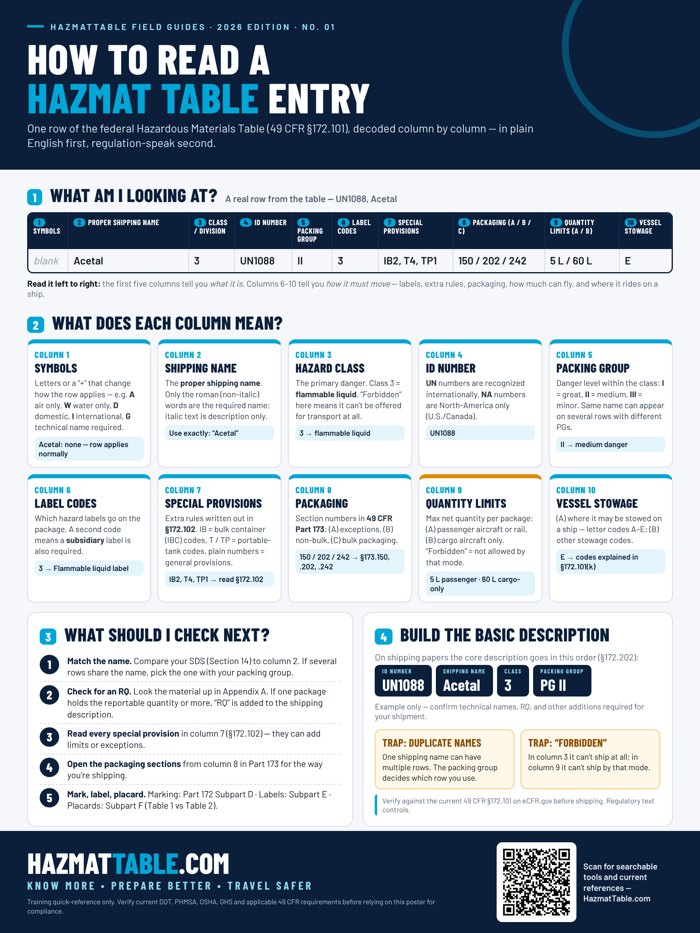
Get the HazmatTable Field Guide poster pack
8 printable hazmat reference posters — reading a table entry, hazard classes, placards, segregation, shipping papers and more. Free, sent to your inbox.
Common questions about UN3301
What is UN3301?
UN3301 is the identification number for Corrosive liquid, self-heating, n.o.s in the DOT Hazardous Materials Table (49 CFR §172.101).
What hazard class is UN3301?
UN3301 is listed under hazard class 8 (corrosive).
What packing group is UN3301?
Packing group for UN3301: I, II. Where several rows exist, the packing group that fits your material decides which row applies.